


Atrial Fibrillation Symptoms And Causes: People often ignore sudden increase in heartbeat, feeling of fluttering in the chest or shortness of breath without any particular reason, considering it to be a normal problem. However, repeated occurrences can be a sign of a heart-related problem, atrial fibrillation. This is one of the most common problems related to heart rhythm in the world. The matter of concern is that many people do not have obvious symptoms and the disease is detected only after a serious problem occurs.
According to estimates from the Global Burden of Disease Study, about 80 lakh people in India are living with atrial fibrillation. Experts say that with increasing age, the increasing burden of obesity, diabetes and uncontrolled high blood pressure is also becoming the reason for the increase in its cases. Dr. Christopher Granger, Professor of Medicine at Duke University School of Medicine, told India Today Digital that atrial fibrillation occurs when abnormal electrical activity starts in the upper chamber of the heart, i.e. the atria. Due to this, the heart starts beating irregularly instead of beating in a normal and organized manner.
What are the symptoms of atrial fibrillation?
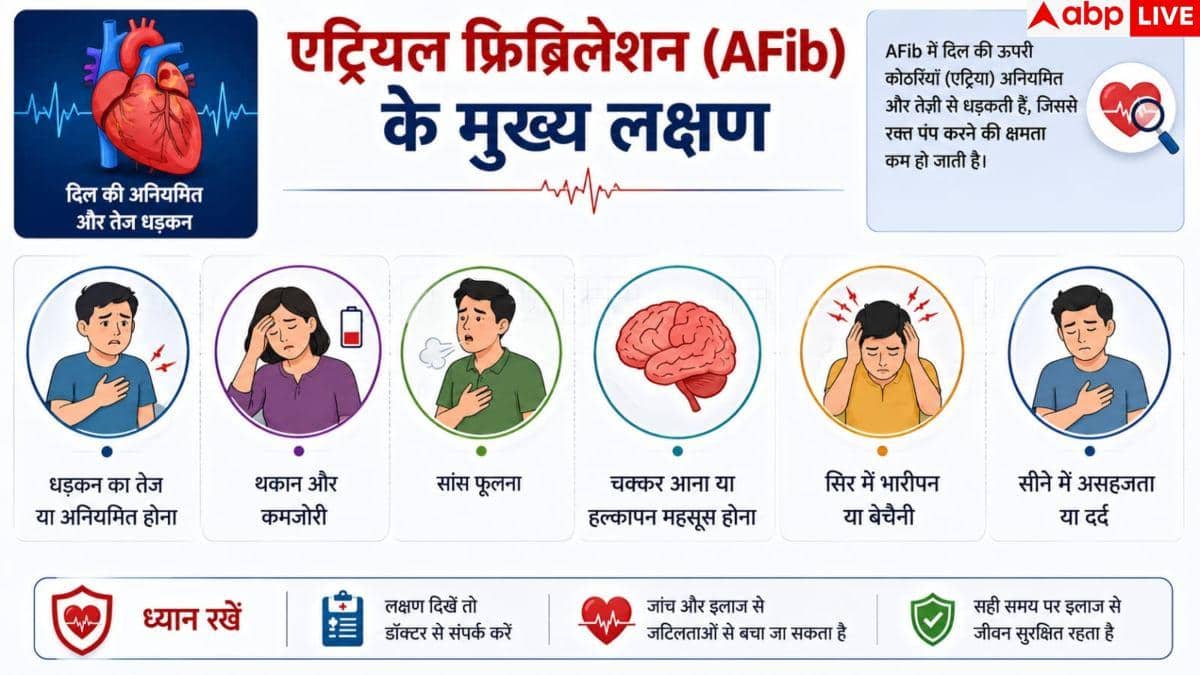
Identification of atrial fibrillation is not easy in every person. In some people its symptoms are clearly visible, while in many people it may occur without any obvious symptoms. This is called silent atrial fibrillation. In such cases, the disease may not be detected until a serious problem occurs. Its common symptoms include very fast heartbeat or feeling of palpitations, shortness of breath, feeling very tired, reduced ability to exercise and irregular pulse.
According to Dr. Granger, continuous heartbeat or sudden increase in heart rate while resting should not be ignored. Smartwatches that detect irregular heart rhythms can also help identify this problem in some people. However, after this ECG may be required for further investigation.
Why is atrial fibrillation dangerous?
The biggest risk associated with atrial fibrillation is stroke. When the upper chambers of the heart cannot contract normally, blood can accumulate inside the heart. This increases the risk of blood clot formation. If this clot leaves the heart and reaches the brain, it can stop the blood flow there and cause ischemic stroke. According to Dr. Granger, atrial fibrillation increases the risk of stroke by about five times. One out of every five strokes is related to this problem. Strokes associated with atrial fibrillation are often more severe and the patient may be at greater risk of permanent disability.
This problem is not limited to stroke only. Atrial fibrillation can also contribute to heart failure by affecting the pumping ability of the heart. This can increase problems like accumulation of fluid in the lungs and shortness of breath.
Read this also – Mustard Oil vs Olive Oil Benefits: Mustard or Olive…Which oil is best for heart patients?
It is possible to prevent up to 70 percent stroke with treatment
Timely use of anticoagulant medicines is considered important in preventing stroke associated with atrial fibrillation. These are also commonly called blood thinners. According to Dr. Granger, use of effective blood thinners can prevent about 70 percent of strokes caused by atrial fibrillation. In its treatment, medicines that control the speed or rhythm of the heartbeat can also be given. Catheter ablation may be required in some patients. This is a minimally invasive procedure that attempts to restore the heart’s normal rhythm by stopping abnormal electrical signals.
Is it possible to prevent atrial fibrillation?
Some risk factors, such as age and genetics, cannot be changed, but controlling many lifestyle factors can help reduce the risk or delay the disease. Dr. Granger recommends keeping blood pressure under control, managing diabetes and cholesterol, maintaining a healthy weight, and getting regular exercise. Apart from this, it is also important to avoid smoking, limit alcohol consumption and get adequate sleep. If there is a suspicion of sleep apnea, it is advised to get it tested. He also said that drinking limited amounts of tea or coffee does not appear to increase the risk of atrial fibrillation. In some studies, its relation with reduced risk has also been seen.
Read this also – Period pain can be as severe as a heart attack
Disclaimer: This information is based on research studies and expert opinion. Do not consider this as a substitute for medical advice. Before adopting any new activity or exercise, please consult your doctor or relevant specialist.
Check out below Health Tools-
Calculate Your Body Mass Index (BMI)
Calculate The Age Through Age Calculator
Be the first to read breaking news in Hindi aajsamacharindia.com| Today’s latest news, live news updates, read most reliable Hindi news website aajsamacharindia.com|
Like us on Facebook or follow us on Twitter for breaking news and live news updates.