
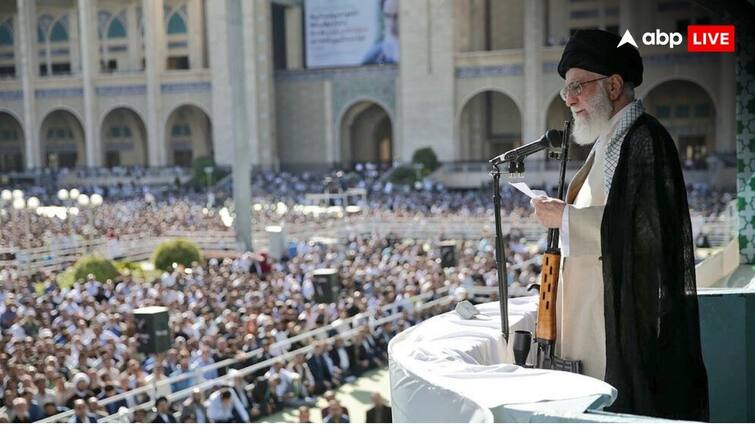

Israel Iran Fight: Iran’s top leader Ayatollah Ali Khamenei chose the historic Imam Khomeini Mosque for his first sermon in nearly five years, in which he insisted Israel would not last long and defended Iran’s attacks on Tel Aviv. The place from where Khamenei gave this sermon is also special.
Iran’s historic Khomeini Mosque played an important role in the 1979 Islamic Revolution and from here Khamenei addressed thousands of Iranians. Imam Khomeini Mosque was earlier known as Shah Mosque. This is one of the most historical and important architectural wonders of Iran. This mosque was built during the reign of Fatah-Ali Shah Qajar in the 18th century. This mosque is one of the surviving buildings of the Qajar era.
Who ruled Iran before the revolution?
Before the revolution, Iran was ruled by Shah Mohammad Reza Pahlavi and he was supported by Western countries and the United States. However, after starting the ‘White Revolution’ in 1963, Shah became extremely unpopular. This revolution included many reforms, including voting rights for women.
Many in Iran praised these reforms, while Islamic leaders saw them as the Westernization of Iran. After this, under the leadership of Shia religious leader Ruhollah Khomeini and his follower Ayatollah Ali Khamenei, this class called for the overthrow of the Shah.
In 1964, Khomeini was exiled and resettled across the border in Iraq. Ali Khamenei was also involved in protests against Shah and was jailed several times.
And then Khomeini Mosque became an important place
As social unrest and economic discontent increased under the Shah’s rule, protests and strikes were initiated from the Khomeini Mosque. Its strategic location in Tehran’s central square became a natural gathering place for Islamic scholars, students and activists. The sermons delivered at the mosque mixed political criticism of the Shah’s rule with religious teachings, which resonated with a wide section of society.
In addition, messages from exiled Khomeini were also shared from the mosque. This helped maintain momentum among his supporters despite government repression. It also served as a coordination center for different opposition groups, helping to unify factions under the banner of Islamic nationalism. After the Shah was ousted from power in 1979, the name of the mosque was changed to Imam Khomeini Mosque.
The Imam Khomeini Mosque continues to play an important role in contemporary Iran and has become a site of remembrance for the martyrs of the revolution. Today, it remains an important site for religious and political ceremonies.
Also read: How a boy from Uttar Pradesh changed the picture of Iran, this story should be read
Be the first to read breaking news in Hindi aajsamacharindia.com| Today’s latest news, live news updates, read most reliable Hindi news website aajsamacharindia.com|
Like us on Facebook or follow us on Twitter for breaking news and live news updates.